A Story from a PTR Alumni: Schuyler
My journey into the field of peace of conflict studies began through my fascination with the cross-section of theology, religious studies, and the work of peace; It felt like a natural extension of my own Christian upbringing and understanding of my faith. While getting my bachelor’s I encountered the work of Miroslav Volf and Richard Kearney, learning about the risk and wager of embracing the other.
After graduating with a bachelor’s in peace and conflict studies, I wanted to continue pursuing the study of religion in the role of peacemaking and justice. When I found a program entitled “Peace, Trauma, and Religion,” it felt like a match made in heaven. I jumped in with both feet, not really knowing what would happen, but it was undoubtably the best choice I could have made. PTR continued to push me to ask questions and to challenge theories about the world, the work of justice, and myself. At a time when my childhood religion, white evangelicalism, was openly embracing the vulgarity and malice of Trump, PTR gave me the means to question my old community and seek answers to the role of faith and the role of religion in the work of justice.
After graduating from PTR, I wanted to continue down the path of justice work, which led me to get a law degree. I took a circuitous route in law school, eventually finding my way to consumer finance and bankruptcy. In my studies I learned about the history of predatory financing in the United States: the most marginalized are fed promises of stability by getting access to credit, but only ever received predatory loans. Learning about these and other institutional patterns and inequalities led me to work in bankruptcy law, helping people reorganize their financial lives to get out of what are often predatory loans.
While my work often does not directly intersect with the field of peace and conflict studies, the work for justice and peace never leaves you behind. Recently, my home, Minneapolis, became the center of authoritarian action targeting the most marginalized in my community and anyone who looked like them.
The last month has reaffirmed the need for justice and the power of nonviolent action for me. Everyone I know is in multiple group chats coordinating how to support their neighbors: sending funds to food banks, creating packages of food or delivering those packages to strangers. Others parked outside Whipple, the federal detention center, to protest or help recently released detainees, who were simply released without phones or winter clothes in -29 degrees Celsius weather, giving them jackets and coordinating rides home. Of course, many people coordinated the tracking of Ice and Border Patrol agents throughout the city to honk car horns and blow whistles to prevent agents from terrorizing their neighbors.
My time at PTR taught me that the journey of peace and justice is never straight; it can often be a pilgrimage, requiring us to revisit areas where we have fallen short. There are millions of daily choices that must be made by every individual. But that is not a limitation to the work of peace. As Minneapolis and many other communities around the world have shown, the work of peace and justice has many roads. My neighbors showed up in ways they felt comfortable, like simply delivering food, while others protested daily, and still others followed ICE even after they witnessed agents murder their neighbors. My own firm held emergency meetings to train on the practice of habeas corpus motions, which is often the only avenue by which detainees can get their day in court to have their cases heard.
It was inspiring to see ordinary people come together. In the face of constant terror, harassment, and violence, people to support one another. They resisted the very human urge to get violent, and on a day when the temperature was -29 degrees Celsius estimates of 100,000 people, nearly a fifth of the population of Minneapolis, met to protest what the Trump regime was doing to their neighbors.
What I have learned this past month is that nonviolent action wins. The Trump regime’s surge of 3000 ICE agents failed to cow my home into submission. We did not abandon our neighbors, and we refused to be made afraid by the regime’s thugs. The work for justice is never complete, and the networks used this past month may go dormant, but they will never be fully gone.
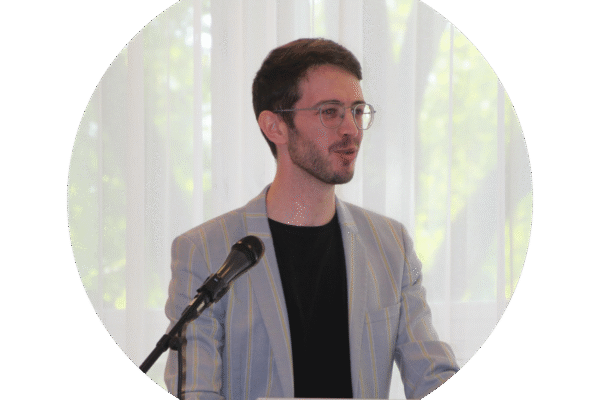
Written by: Schuyler Pals
Schuyler Pals currently lives in Minneapolis, Minnesota. He works as an attorney at Fredrikson & Byron, P.A. working in its Bankruptcy and Restructuring Division. When he isn’t working he enjoys watching British panel shows with his wife and taking his dog for long walks.