2026: REVISITING (MENNONITE) PEACE THEOLOGY & ETHICS
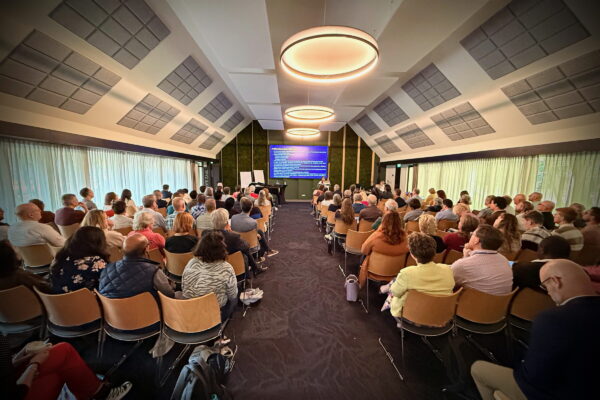
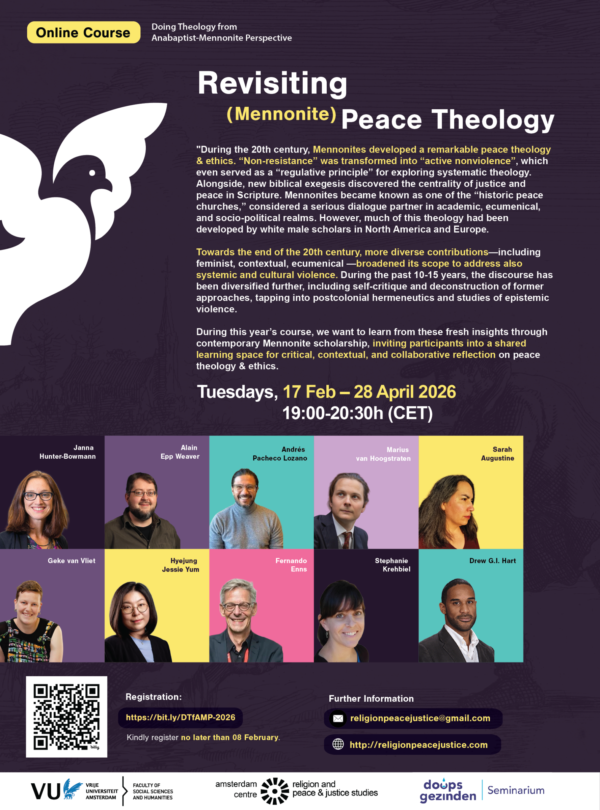
From 17 February to 28 April 2026, ACRPJ organized an online course entitled “Revisiting (Mennonite) Peace Theology.” The course was held every Tuesday from 19:00 to 20:30 CET, featuring speakers from diverse academic, theological, and socio-cultural backgrounds and contexts.
The course aimed to revisit and critically reflect on the development of Mennonite peace theology and ethics, particularly its transformation from the traditional concept of non-resistance toward active nonviolence as a form of Christian witness and engagement in society. Throughout the sessions, participants were invited to explore how Mennonite peace theology has evolved beyond its predominantly Western and male-centered foundations to embrace more diverse perspectives, including feminist, contextual, ecumenical, and postcolonial approaches. The discussions also addressed contemporary challenges such as systemic and cultural violence, social injustice, climate change, migration, and unequal power relations.
By bringing together voices from different contexts, the course provided a space for critical dialogue, theological reflection, and re-examination of established understandings of peace, justice, and nonviolence. It emphasized the continuing relevance of Mennonite peace theology while encouraging more inclusive, contextual, and self-critical approaches to peacemaking in today’s world.
Watch the recorded sessions here:
#1 Introduction to the Course and Epistemic Violence
Speaker: Fernando Enns
#2 Reckoning in Mennonite Peace Theology
Speaker: Janna Hunter-Bowman
#3 Unlearning Obedience
Speaker: Marius van Hoogstraten
#4 Returning to the Radical Roots of Anabaptism
Speaker: Sarah Augustine
#5 A Political Theology of Resistance and Fragile Hope
Speaker: Alain Epp-Weaver
#6 Neighbor Love for Climate Justice
Speaker: Geke van Vliet
#7 Gender Justice/Gender Peace
Speaker: Stephanie Krehbiel
#8 Mennonite Innocence
Speaker: Andrés Pacheco Lozano
#9 Anablacktivism
Speaker: Drew G. I. Hart
#11 Chosen Trauma
Speaker: Fernando Enns