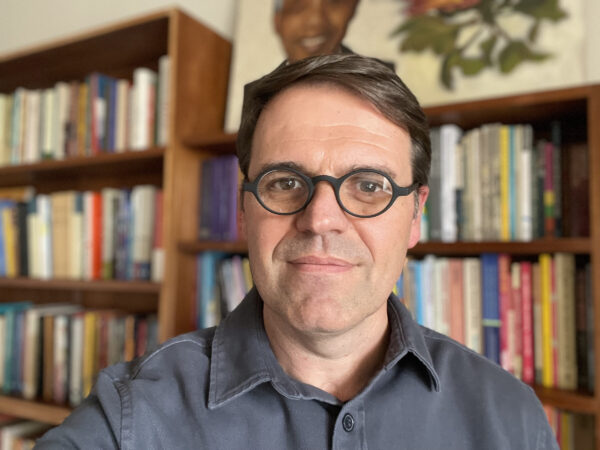
Dion A. Forster: Public Theology as peace, justice and hope (with a spine!)
Background
“Blessed are those who hunger and thirst for righteousness, for they will be filled.” This beatitude (Matthew 5:6, NRSVue) has shaped my life from my involvement the anti-apartheid struggle in South Africa, to my present work for justice, peace, and the integrity of creation in Amsterdam. I was trained as a Methodist minister in South Africa, schooled by African and liberation theologies, and mentored by communities who taught me that faith is never private property, rather it is a form of public courage. These experiences continue to anchor my scholarship in Public Theology and Ethics: rigorous, ecumenical, and always attentive to people and places on the margins.
Work
I serve as University Research Chair and Professor of Public Theology and Ethics at the Vrije Universiteit Amsterdam in the School of Religion and Theology, and also Extraordinary Professor of Systematic Theology and Ethics at Stellenbosch University, South Africa. My research asks how deeply held beliefs, both religious and secular, shape identities, institutions, and policy for good or for harm. Methodologically, I work at the intersection of systematic theology, New Testament studies, and decolonial approaches, with a focus on socially embedded, empirical, and collaborative research. My first PhD was in theology and science (UNISA, 2006), and my second PhD was is in New Testament studies (Radboud, 2017).
Current projects include:
- Studying the Politics of Forgiveness (John Templeton Foundation): how forgiveness coupled with justice functions in polarized and post-conflict settings such as South Africa.
- Advocating for Transformative Religion (DFG/NRF IRTG): religion’s role in social resilience, migration, and democratic life, with African and decolonial emphases;
- Attempting to better understand social identity complexity: focussing on intersectional notions of race, gender, and class as entangled moral imaginaries in religion and public life;
- Translational public theology: developing language, practices, and tools that critically engage beliefs and practices in publics of the academy, society at large, and faith communities.
Alongside my teaching and research, I consult in political theology and social impact for partners such as the G20 Interfaith network, the EU’s Global Exchange on Religion in Society (GERIS), the World Economic Forum, and the Dutch Security Network on issues of depolarization, furthering peace in frozen conflict, work for social cohesion, understanding extremism, and building democratic trust.
Vision
I understand Public Theology as bridge-building in contested places: it listens deeply, names truthfully, and imagines hopefully.
In a world marked by inequality, violence, identity politics, displacement, ecological crisis, and rising religious nationalism, we need scholarship that is empirically rigorous, morally courageous, and pastorally wise. My aim is to help churches and interfaith partners cultivate “hope with a spine”. That is, hope that can face trauma without blinking, negotiate frozen conflicts for greater peace and justice, and still choose the common good. At VU Amsterdam, within the School of Religion and Theology and the Amsterdam Centre for Religion, Peace, and Justice Studies, I am working to co-create spaces where research, formation, and practice meet: peace and reconciliation facilitation, contextual Bible engagement, decolonial scholarly development, and policy-relevant ethics. Living in Amsterdam with my wife and our youngest son, I’m convinced that this city’s rich diversity makes it an ideal space for glocally engaged research that is rooted in neighbourhoods, and connected to the world.
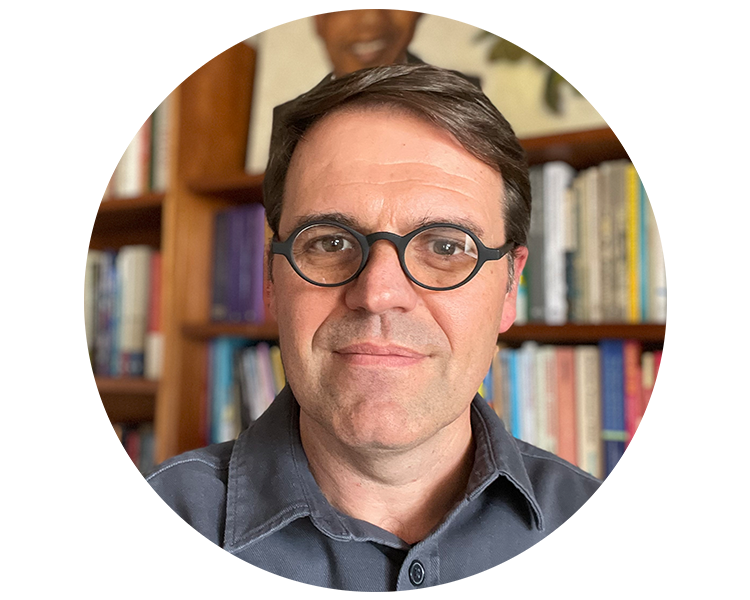
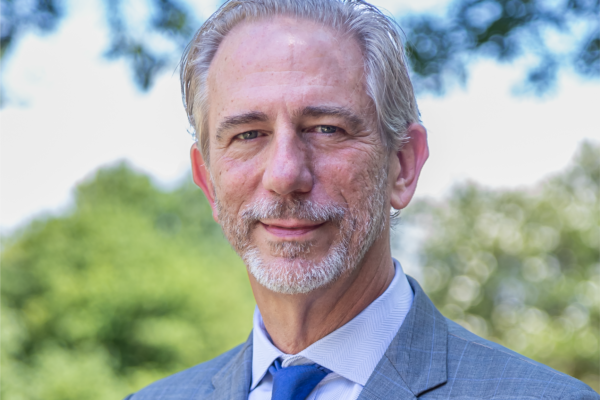
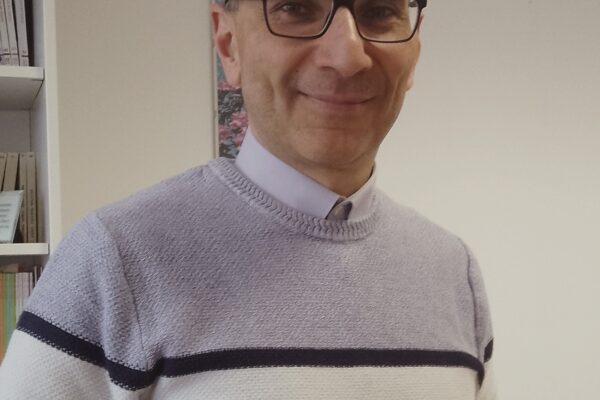
Dion A. Forster
Dion A. Forster is University Research Chair and Professor of Public Theology and Ethics at the Vrije Universiteit Amsterdam and Extraordinary Professor of Systematic Theology and Ethics at Stellenbosch University. His work focuses on the intersections of belief, identity, and justice, with current projects on the politics of forgiveness, transformative religion, and social identity complexity. A Methodist minister by training, he works with partners such as the G20 Interfaith network, GERIS, the World Economic Forum, and the Dutch Security Network to translate research into practices that foster peace, reconciliation, and social cohesion. He lives in Amsterdam with his wife and their youngest son, while their eldest daughter lives in Cape Town